
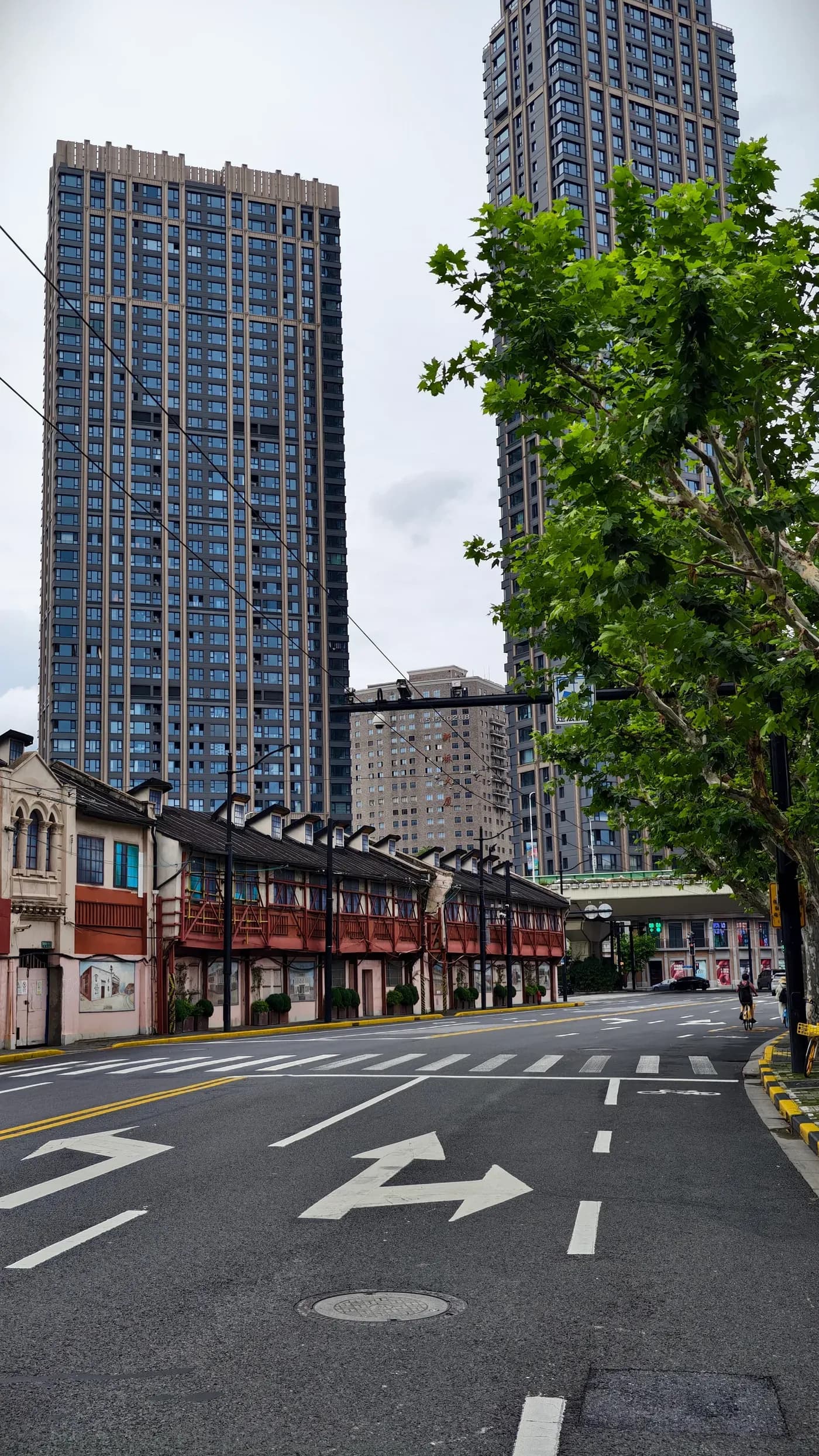
Moving to Shanghai in 2026 comes down to a handful of decisions you make before you arrive: what it will really cost, whether to sort the school or the apartment first, which visa gets you in, and who you actually trust to advise you. Get the order right and the move is smooth. This guide walks each one — honestly, and in the order that matters.
I'm Amir. I've lived in Shanghai for fifteen years, and my mother Lisa and I help families and professionals land here. We take no commission from any landlord, school, or agent — so what follows is the version we'd give a friend, not a sales page.
What will it actually cost?
Two line items dominate: rent, and — if you choose an international school — tuition. Almost everything else in Shanghai is surprisingly affordable and scales to your taste. So the honest answer to "is Shanghai expensive?" is: those two decisions set your budget, and the rest is up to you.
Day one, to rent an apartment, plan for roughly 2.5 to 4.5 months' rent as cash at signing:
| Item | Typical range | Notes |
|---|---|---|
| Deposit (押金 yājīn) | ~1 month | 押一付一 or 押一付三 |
| Rent in advance | 1–3 months | monthly vs quarterly payment |
| Agent fee | ~0.5–1 month | who pays varies; negotiable in 2026 |
| Day-one total | ~2.5–4.5 months' rent | school fees are separate |
School fees are where the range explodes — it depends on the system and your child's age (kindergarten is much cheaper; the gap widens through primary, middle and high school). One thing to know up front: a foreign child is not covered by the free compulsory education local families receive. Our Shanghai international-school fees guide compares current tuition with application fees, deposits, buses, meals and other extras.
| Path | Typical tuition | Notes |
|---|---|---|
| Public school | Modest — a fraction of international | Foreign children pay a fee (unlike locals), but a small one by comparison, and often reduced or waived with a Talent Residence Permit |
| Private / bilingual | Between the two — varies widely | — |
| International school | ~¥200,000–400,000 / year | Foreign passport required; early years lower, upper-secondary / IB at the top |
Before comparing prices, first check which Shanghai school routes your child may attend. Eligibility differs between schools for children of foreign personnel, private bilingual schools and public-school routes.
Two things worth knowing about the public route. It goes by catchment ("proximity"), so you'll need a lease or deed inside the school's zone — one more reason the school comes before the apartment. And cheaper doesn't mean worse: many Shanghai public schools have excellent facilities, teachers and activities. The real question isn't quality, it's the system — a Chinese-curriculum, Chinese-medium education is a very different path from an international one, and that fit matters more than the price tag.
Beyond rent and tuition, Shanghai is a bargain — and it scales to your taste (丰俭由人 fēng jiǎn yóu rén: as thrifty or lavish as you like). A family of three spends about ¥500–600 a month on utilities (water, electricity, internet) and, cooking at home, ¥3,000–4,000 a month on groceries. The city has Michelin restaurants that run into the thousands and clean, cheap chain supermarkets on the same block. You choose your level.
A serviced apartment can bridge your first weeks without the full day-one wall — we break the trade-off down in serviced apartment vs renting. Before you transfer rent or a deposit on a long-term home, work through our Shanghai rental pre-payment checklist.
Apartment first, or school first?
If you're moving with children, choose the school first — then the neighborhood around it, then the real rush-hour commute, then the apartment. Here's why: Shanghai is enormous (about four times the size of Greater London, eight times New York City), and school admissions close months before a lease ever starts. Get the order wrong and you're in a lovely apartment on the wrong side of the city from the right school.
“Pick the school first. Then pick the area inside its real commute. Everything after that is preference, not strategy.”
The full logic — and where families actually live because of it — is in why school choice comes before the apartment and where expat families live in Shanghai.
How do you choose a school without getting it wrong?
Choose on fit, not ranking. A top-ranked, hyper-competitive school can be exactly the wrong place for a child arriving mid-stream with little Mandarin. Start with our complete guide to international schools in Shanghai, then ask each shortlisted school directly about the support your child would actually need. Because we take no school commission, we'll only ever name a fit, never a "best."
Who's actually on your side?
Before you take anyone's advice, ask how they get paid. Most people helping you move earn money through your rent, or through commissions from landlords, schools, and service providers — so their incentives can quietly pull against yours. We charge one flat fee, from you, and take nothing from anyone else. That's the whole model, and it's why we can tell you to walk away from a deal.
Watch out
押一付一 and 押一付三 are common payment structures, not legal safety guarantees. The lease should state the deposit amount, return deadline and permitted deductions, and the payment recipient should match the legal relationship in the contract.
We wrote the honest version of how the industry is paid in independent vs commission-based relocation agents.
Can you come and see it first?
For most Western passports and many others, yes — ordinary passport holders from around 50 countries can now enter China visa-free for up to 30 days, a trial running through December 31, 2026. It's the easiest it has been in years to scout Shanghai in person before you commit to anything.
| Where you hold a passport | Visa-free entry? |
|---|---|
| Most of Europe — UK, Germany, France, Italy, Spain, Netherlands, Switzerland + ~30 more | Yes — up to 30 days |
| Japan & South Korea | Yes — up to 30 days |
| Gulf states — Bahrain, Kuwait, Oman, Saudi Arabia | Yes — up to 30 days |
| Canada, Brunei, and others (~50 countries in total) | Yes — up to 30 days |
| Not on the list (e.g. the United States) | A separate visa-free *transit* policy may still allow a short stay |
Always confirm the current rules and your own passport on the official National Immigration Administration list. And note: visa-free entry is for a short visit — being here for up to 30 days is fine, but you can't work on it, and it isn't a way to settle. Moving here to live and work needs the proper visa and work permit (see below).
What's daily life actually like now?
Easier than your picture of China probably says. A local SIM card costs about ¥30–40 a month; link Alipay and WeChat Pay to a foreign card once and a single phone pays for the metro, buses, taxis, ferries, and the shared bikes on every corner; the city now has more than a thousand parks. Most residents rarely touch cash. One note on connectivity: some Western apps don't work on mainland networks, so keep your home eSIM or roaming line active — that's the reliable way to keep your home number and apps while you settle in. (Full Alipay/WeChat setup and a first-30-days sequence are coming in this series.) For long-term residents, our guide to opening a bank account in Shanghai explains the documents, branch choice and timing.
When is Shanghai not the right move?
Sometimes it isn't — and we'd rather you love where you land than sell you a move you'll regret.
- It's one of the most expensive cities in China. Shanghai is a consumer city; the same budget stretches noticeably further in most other Chinese cities. If value is your first priority, weigh that honestly.
- It's a dense megacity, not the countryside. Shanghai is flat and built-up, with little wild nature close by. If you want lakes, hills and easy weekends in nature, cities like Hangzhou, Ningbo or Wuxi — all an hour or so away — offer far more of it, and stay within easy reach of Shanghai.
- The weather asks something of you. Winters are cold and damp, and there's no government-subsidised central heating (Shanghai sits south of China's heating line) — newer flats have underfloor heating, otherwise you heat with air-conditioning, which costs noticeably more than a heated northern home. Then early summer brings 梅雨 (méiyǔ), the plum-rain season: about three weeks of relentless humidity, followed by a genuinely hot, sticky summer.
- For business owners, it's the priciest base in China. Shanghai carries the highest labour and operating costs in the country. If your margins are thin, you'll feel it — the city rewards high-value, high-margin work that can absorb the overhead, not businesses competing on price.
- A thin package can fail at the work permit. The 2026 salary floors mean a below-threshold offer can be refused at permit or renewal, whatever the lifestyle math says — the detail is in Shanghai's 2026 work-permit reset.
If you're sensitive to crowds and pace, want nature on your doorstep, or you're building a thin-margin business, Shanghai may not be your best fit in China — and we'll tell you so.
What's coming in this guide
This page is the hub. Over the coming weeks each decision gets its own deep dive, and each pairs with a short video:
- The real move-in cost, with a calculator
- Your first 30 days, in the right order
- Choosing a school on fit, step by step
- Alipay & WeChat Pay setup for foreigners
- The 2026 visa-free window, in detail
- How to verify a Shanghai rental before paying
Common questions
Frequently asked questions
How much does it cost to move to Shanghai?
The two big costs are rent and, if you choose an international school, tuition — roughly ¥200,000 to ¥400,000 a year. Public school is far cheaper — for a foreign child it carries only a modest fee (often reduced with a talent permit) rather than the free schooling locals get. Day-to-day living is affordable: a family of three spends roughly ¥500–600 a month on utilities and ¥3,000–4,000 cooking at home.
Is Shanghai expensive to live in?
It's one of the most expensive cities in China, but it's remarkably flexible. Rent and international-school tuition are the big line items; almost everything else scales to your taste, from Michelin dinners to clean, cheap supermarkets on the same street.
Should I sort the apartment or the school first?
With children, school first — then the neighborhood, then the commute, then the apartment. Admissions close months before a lease starts, and Shanghai is large enough that the wrong order can strand you far from the right school.
Do my children need to speak Chinese?
No. Many families choose international or bilingual schools with English-language support. What matters is asking each school how deep that support actually goes for a child starting with little Mandarin.
Can I visit Shanghai before I commit to moving?
Usually yes. Passport holders from around 50 countries can enter visa-free for up to 30 days under a trial running through December 31, 2026, and some other nationalities can use visa-free transit. Confirm your own passport on the official list, and note that living and working still requires the proper visa.
Can my spouse work in Shanghai?
Not automatically — a dependent (S1) visa is for residence, not work. There are routes to a work permit, but the 2026 salary floors make some of them hard to clear, so it's worth checking before you move.
Sources & last checked — July 2026; rental guidance updated August 2026. Re-confirm anything time-sensitive before you rely on it.
- Visa-free entry (~50 countries · up to 30 days · through Dec 31, 2026): official list — China National Immigration Administration.
- Costs, rent, deposits and school fees: verified first-hand from our on-the-ground relocation work in Shanghai. These are ranges — your exact numbers vary by district, school and timing.
Keep reading
- GuideBefore you pay for a Shanghai apartmentBefore paying for a Shanghai rental, verify the owner, agent, contract, deposit, payment route, lease filing and 24-hour registration.→
- GuideWhy school choice should come before apartment in ShanghaiChoose a Shanghai school before signing a lease: compare eligibility, timing, commute and the likely cost of correcting an apartment-first decision.→
- GuideWhere expat families actually live in Shanghai (2026): Jing'an, the FFC, Pudong, Hongqiao, Xinjiangwancheng — honest trade-offsAn honest 2026 comparison of the five Shanghai neighborhoods that absorb almost every relocating expat family — Jing'an, the Former French Concession, Pudong (Jinqiao/Lujiazui), Hongqiao/Gubei, and the emerging Xinjiangwancheng. Real rents in a softening market, real commute times to specific schools, and the regret column no other guide gives you.→
helloChina weekly
Get the weekly Shanghai intel
One email a week — visa changes, housing, international schools and culture. Timely, practical, no fluff.